One of the First Questions Every E-Commerce Brand Asks
As your online business grows, one of the first challenges is deciding how much space you actually need. The short answer? It depends on how you operate, what you sell, and how fast you’re growing.
A well-sized warehouse isn’t just about square footage — it’s about workflow, efficiency, and scalability.
Typical Size Ranges
Here’s a guideline for different stages of e-commerce businesses:
- 300–500 sq ft: Perfect for early-stage sellers shipping a few dozen orders a day. Enough room for shelves, a small packing area, and a desk.
- 500–800 sq ft: Ideal for established small brands with regular stock deliveries and moderate order volumes. Plenty of space for racking, packing benches, and a small office.
- 800+ sq ft: Suited for businesses with pallets, bulk storage, or light fulfilment teams. You can run multiple packing stations or handle higher order volumes efficiently.
What Matters More Than Size
Square footage is important, but other factors can double the effectiveness of your space:
- Layout: Open-plan designs make it easy to move around and scale operations.
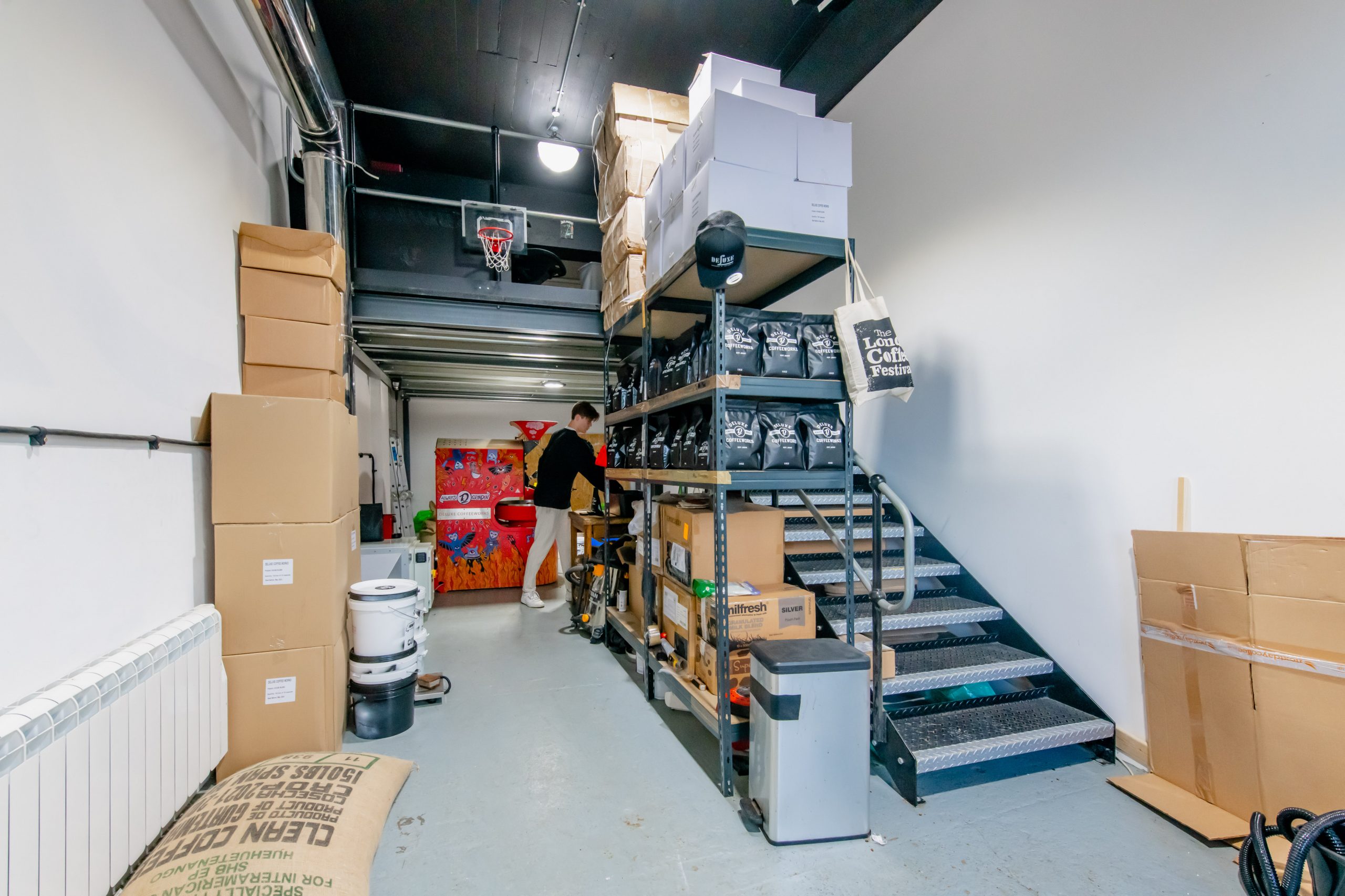
- Ceiling Height: High ceilings allow vertical storage, which maximizes your usable space.
- Access: Ground-floor units with wide doors make receiving deliveries simple and efficient.
A smaller unit with smart layout and vertical storage often outperforms a larger, poorly organized space.
Think About Your Workflow
Consider how your daily operations will fit into the space:
- Packing benches for orders
- Photography or product content creation
- Office/admin area for customer service and inventory management
- Space for customer collections, if relevant
Build in buffer space now — it’s cheaper and easier than moving to a bigger warehouse later.